About this webpage
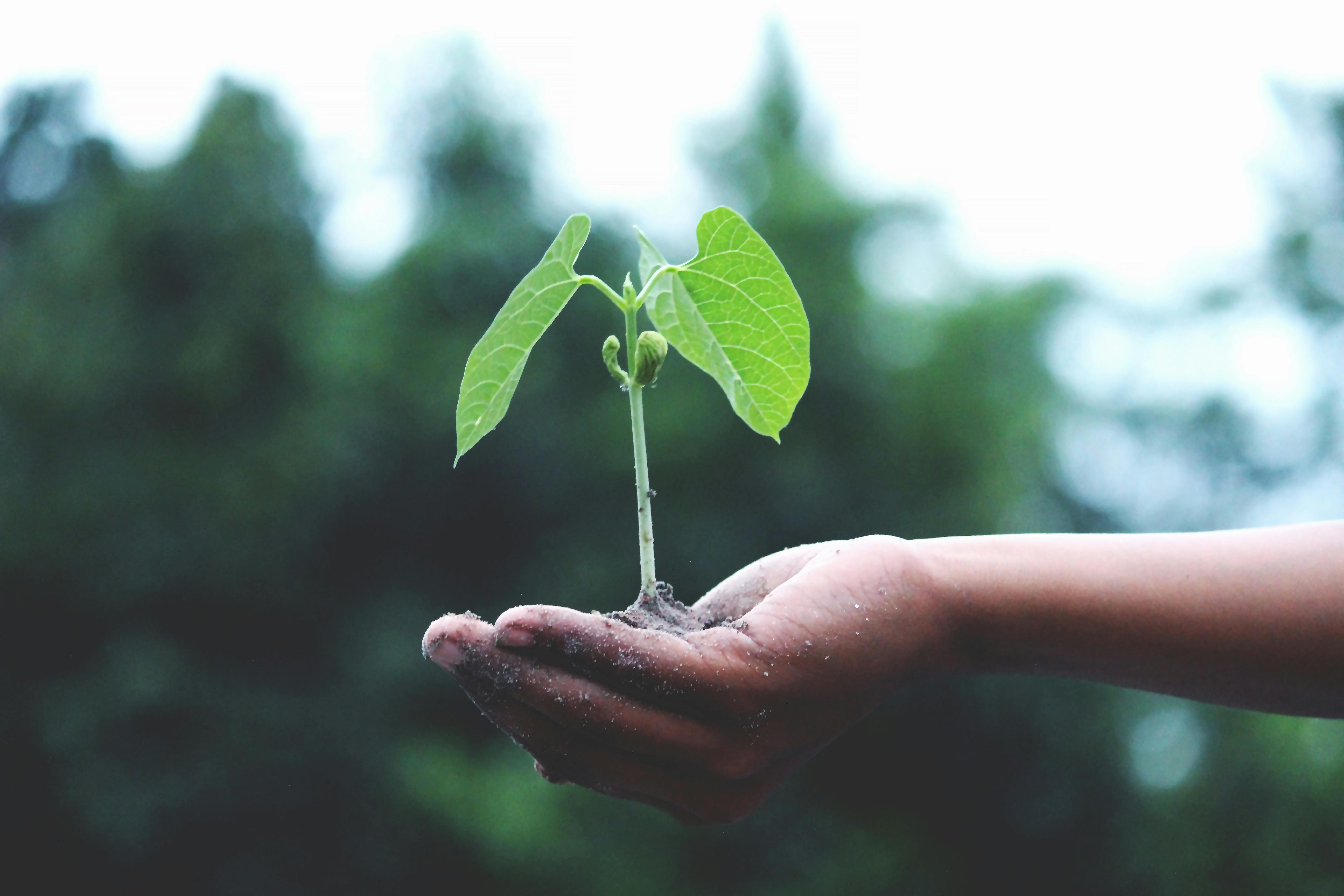
This collection of resources was curated to help teachers and teacher candidates in Simcoe County teach K-6 students about climate change.
Below you will find an intro to the basic concepts of climate change, resources for lesson planning and field trips, and Ontario curriculum connections.
The basics of climate change
The Earth's atmosphere traps heat from the sun keeping the Earth warm. This has created just the right conditions on Earth to sustain life. The atmosphere contains mostly nitrogen and oxygen, but there are other gasses in it including carbon. Due to human burning of fossil fuels, the Earth's atmosphere is trapping more and more carbon which is causing the temperature of the Earth warm faster than it should by trapping extra heat from the sun.
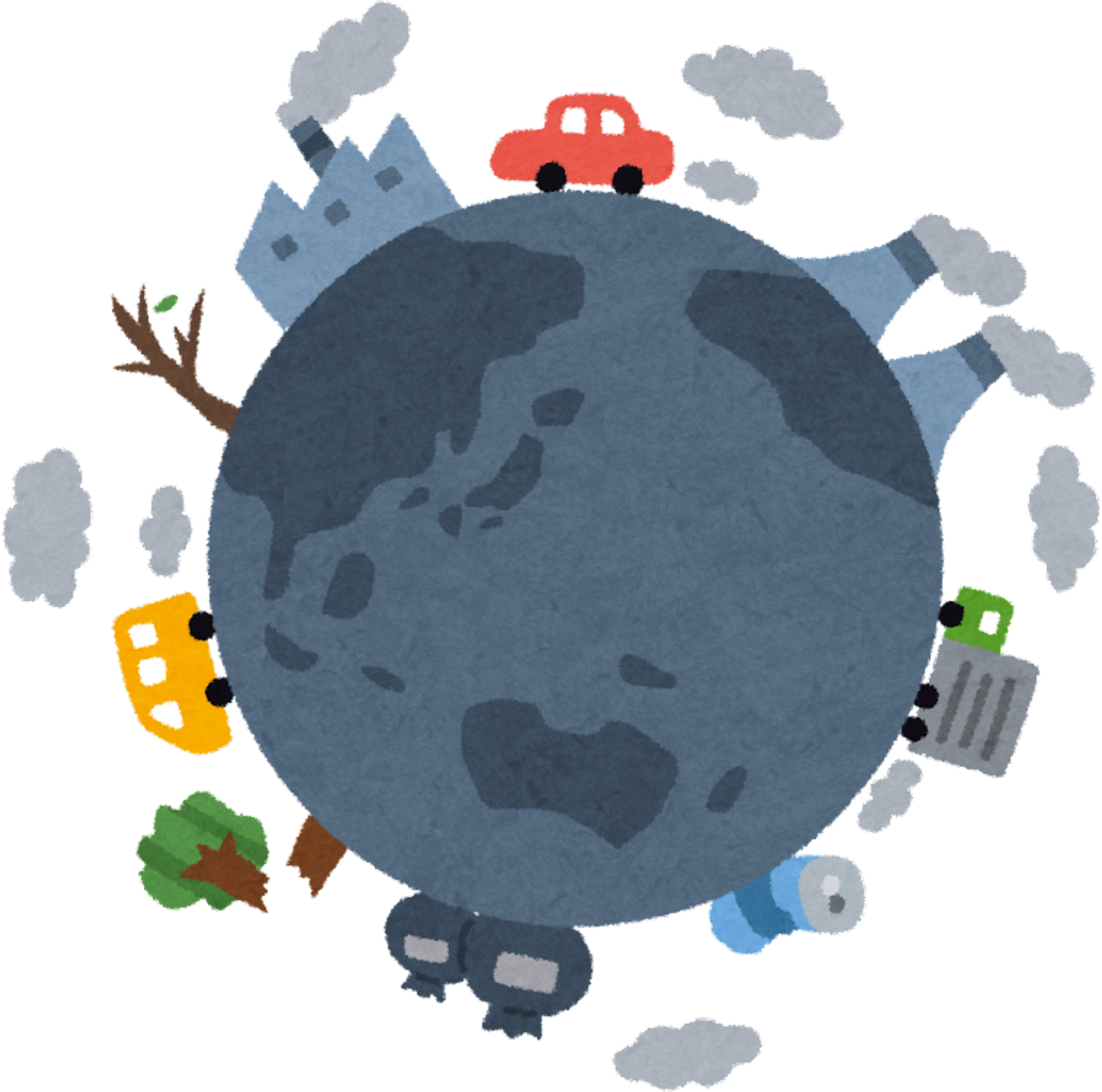
This faster warming of the Earth, otherwise known as "global warming" is causing a lot of dangerous and extreme weather around the world. Due to the melting of Arctic ice, coastal regions are particularly at risk from rising sea levels.
We have the opportunity to slow the warming of the Earth if we transition away from relying on fossil fuels for our energy.
For more information about the science of the carbon cycle, check out this great tutorial from Khan Academy.
What children want us to know about climate change | BBC Ideas
Resources for teaching
Nasa Climate Kids
Interactive activities and information targeted at elementary school-aged kids.
TVO Learn Climate Change and Biodiversity
A grade 6 lesson (could be differentiated) including a minds on, action and consolidation.
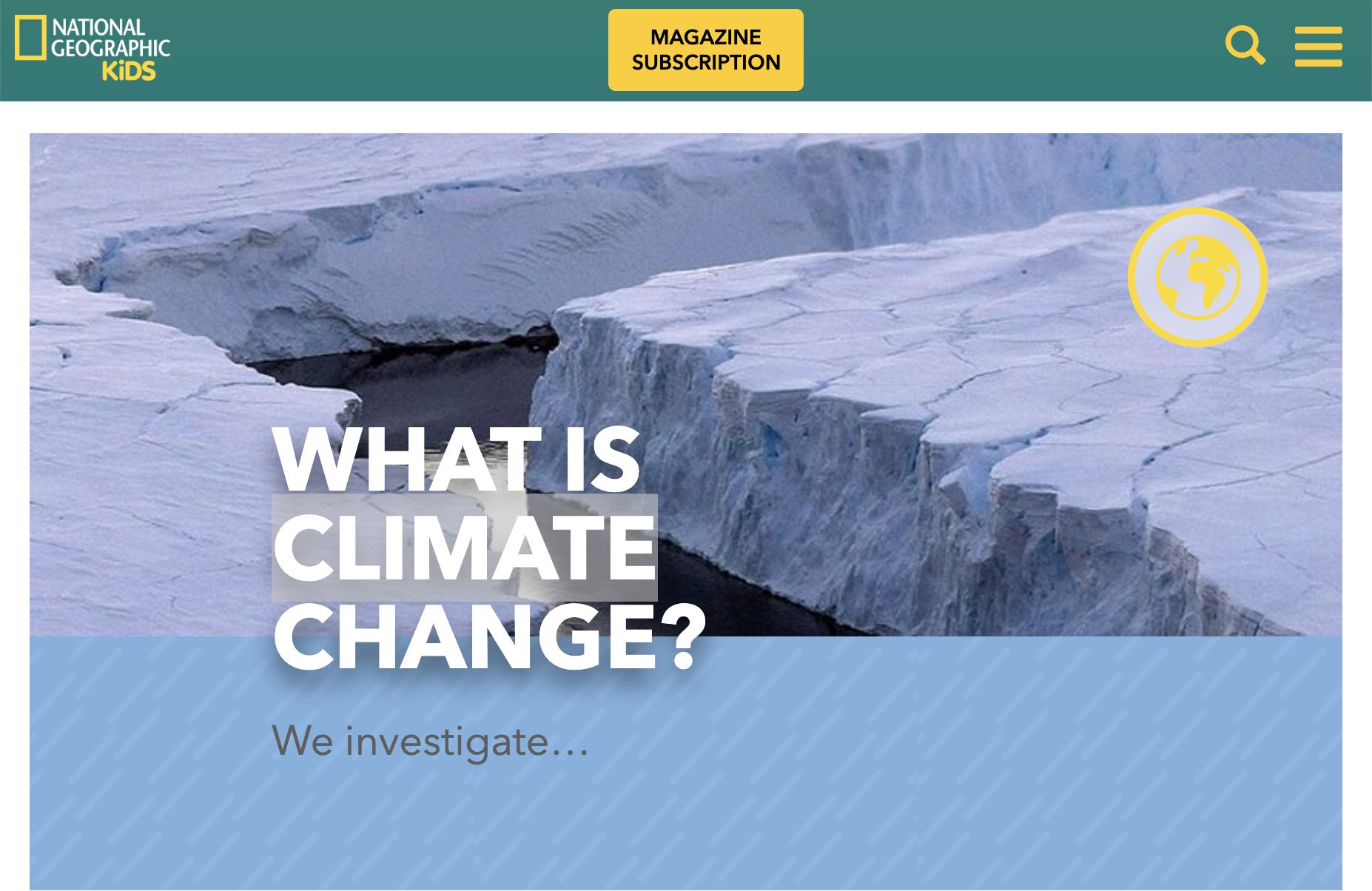
National Geographic Kids - What is Climate Change?
A kid-friendly set of resources and explanations about climate change, its causes and the impact on animals and the environment.
Centre for Climate and Energy Solutions - Climate Basics for Kids
Scientific explanations of climate change and greenhouse gasses for kids, including ways to get involved.
Climate Kids
Educational materials, resources (e.g. colouring books) and activities for kids to help them understand climate change and become good environmental stewards.
Wye Marsh Virtual Programs
60 minute programs hosted online to help students learn about the natural world and environmental stewardship with a local perspective.
What is Climate? Our scientists explain it all to an eleven-year old
Visual and video explanations about climate change geared to junior elementary students.
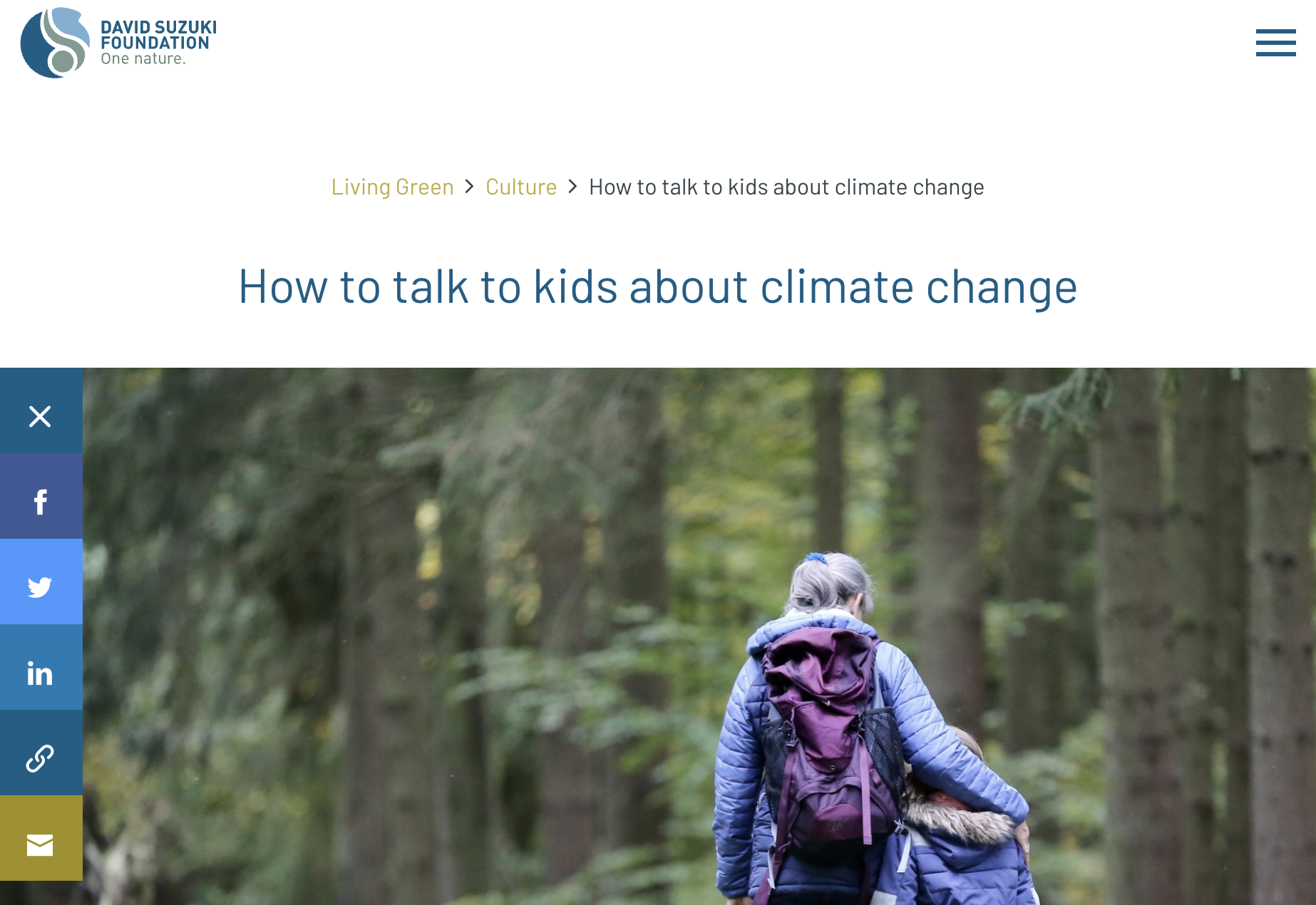
How to talk to kids about climate change (David Suzuki Foundation)
A guide for talking to Canadian students about climate change without creating too much "eco-anxiety".
Field trip Ideas
-
Simcoe County Museum
Program: "Growth and Change in the Natural World" Description: Designed for Kindergarten to Grade 2 students, this program explores the diversity of life through outdoor experiences, examining the basic needs and characteristics of animals and plants. Students investigate healthy environments and how nature recycles, providing foundational knowledge related to ecological concepts.
-
Lake Simcoe Region Conservation Authority
Program: "Forests of the Future" Description: Aimed at Grade 7 students, this program investigates the role of trees in carbon storage and the impacts of climate change on local forests. Through pre-learning activities, on-site exploration using GPS and data collection, and post-visit analysis, students gain insights into forest management and sustainability.
-
Kortright Centre for Conservation
Program: Various curriculum-linked programs Description: The Kortright Centre offers a range of programs for students from Kindergarten through Grade 8, focusing on hands-on environmental education. Topics include plant growth, ecosystems, and sustainable practices, all of which relate to understanding climate change.
-
Are you planning a visit to Wye Marsh?
Our team of enthusiastic Naturalists are excited to share their knowledge and appreciation for the natural world, environmental stewardship, and the many benefits associated with participating in physical activities out-of-doors. Email us at education@wyemarsh.com to schedule a call to plan your visit!
-
Nature Centre at Scanlon Creek (programming for all grades)
Bring your students to Scanlon Creek for the day. Located in Bradford-West Gwillimbury, we offer a wide range of curriculum-connected programs across a variety of subject areas.
Our experienced outdoor educators bring the curriculum to life in a stimulating outdoor setting with a number of interesting, hands-on activities for students, while also working with you to ensure we are meeting your specific learning goals for the field trip.
-
The Tiffin Centre
Primary - JK to Grade 3 The Tiffin Centre offers 1/2-day programs that can be combined for a full day of experiential, hands-on learning. Is it time for your students to put on their rubber boots and explore our ponds? Insects, mammals and bird studies are also available. Our programs are aligned with the Ontario Curriculum. We provide active learning activities, including Pond Studies, Air and Water, and nature walks.
Junior – Grade 4 to 6 The Tiffin Centre offers 1/2-day programs that can be combined for a full day of experiential, hands-on learning. Is it time for your students to put on their rubber boots and explore our ponds? Insects, mammals and bird studies are also available. Our programs are aligned with the Ontario Curriculum. We provide active learning activities, including Pond Studies, Air and Water, and nature walks.
Curriculum Connections
There are many direct ways to connect climate change to the science curriculum (examples below). The social studies curriculum offers connections to climate change through the grades in strand B. People and Environments. We can also look for cross-curricular opportunities like creating artworks about climate change, using climate change data in math, or as a subject for reading and writing in language.
Kindergarten
Overall expectations- Overall expectation 14. demonstrate an awareness of the natural and built environment through hands-on investigations, observations, questions, and representations of their findings
- Overall expectation 29. demonstrate an understanding of the natural world and the need to care for and respect the environment
"Throughout their learning in Kindergarten and beyond, children are given opportunities to learn about what it means to be a responsible, active citizen in the community of the classroom and the diverse communities to which they belong within and outside the school. It is important for children to understand that they belong to many communities and that, ultimately, they are all citizens of the global community."
The Kindergarten Program, pg. 51
Grade 1 Science
Strand B. Life Systems
The specific expecations explore the idea of a healthy environment and how we can contribute positively to the health of the environment.
Strand C. Matter and Energy
The specific expectations explore energy, how we use it at home and at school and various sources of energy and the idea that energy is a limited resource. The concept of the sun providing warmth and helping plants grow is covered.
Strand E. Earth and Space Systems
The specific expectations explore the concept of seasons and weather and our relationship to the sun with respect to weather.
Grade 2 Science
Strand B. Life Systems
The specific expectations explore the relationship between animals and the environment, the lifecycle of various animals and the impacts that humans have on animal populations. This could be an opportunity to introduce ideas about rising sea levels or acidic oceans impacting animal populations due to climate change.
Strand C. Matter and Energy
This strand focuses on changing states from solid to liquid, it could be an opportunity to investigate how water levels rise when ice melts.
Strand E. Earth and Space Systems
This strand talks about human impacts on air and water, it could be an opportunity to talk about pollution and carbon emissions.
Grade 3 Science
Strand B. Life Systems
The specific expectations explore the importance of plants, human impacts on plants and growing local food as well as covering the concept of photosynthesis and the role of carbon. There is an emphasis on learning from Indigenous communities.
Strand E. Earth and Space Systems
E1. Relating Science and Technology to Our Changing WorldThis strand focuses on soil health and how humans impact soil. This could be connected to climate change with respect to agricultural practices.
Grade 4 Science
Strand B. Life Systemss
The specific expectations explore animal habitats, endangered species and the human impact on animals. The concepts of foodwebs and the interconnections between species and their environment are covered.
Grade 5
Strand C. Matter and Energy
The specicic expectations explore the connections between changes of state (solid, liquid and gas) and manufacturing processes. For example, "C2.6 - explain how changes of state can occur when matter absorbs or releases thermal energy" could be a good opportunity to talk about the state changes in burning fossil fuels.
Strand E. Earth and Space Systems
The specific expectations explore the ideas of human use of energy and natural resources, how humans can reduce our energy consumption, and specifically touch on climate change and renewable energy in:
- E2.5 identify renewable and non-renewable sources of energy
- E2.6 explain how the use of energy derived from fossil fuels changes the composition of the atmosphere and how these changes contribute to climate change
Grade 6 Science
Strand B. Life Systems
The specific expectations explore biodiversity and the interconnections between humans, biodiversity and the environment. Climate change is specifically covered in:
- B2.7 explain how climate change contributes to a loss of biodiversity, and describe the impact of this loss
Strand C. Matter and Energy
The specific expectations explore how electric energy works, the use and conservation of it, and the direct relationship between this and climate change.
Strand E. Earth and Space Systems
The specific expectations explore space explorations including the social and environmental impacts. Climate change is explicitly covered in E1.2:
- E1.2 assess the role of space exploration technology in observing and understanding environmental changes on Earth, including climate change